What the Job Includes
Water, sewer, power, gas and irrigation trenches cut to depth, bedded properly and backfilled without wrecking the yard. Trenching looks like the simplest thing an excavator does, and it's where the most expensive mistakes get buried. Line locates come first, every time.
Most of this work happens in the Mini-Cassia towns around the yard - Burley, Rupert, Heyburn, Paul and Declo - and across the Magic Valley in Twin Falls, Kimberly, Filer, Buhl and Jerome. We also run scheduled route days east to American Falls, Pocatello and Idaho Falls for trenching & utility lines on acreage and new construction, so a job there gets a real date rather than a maybe.
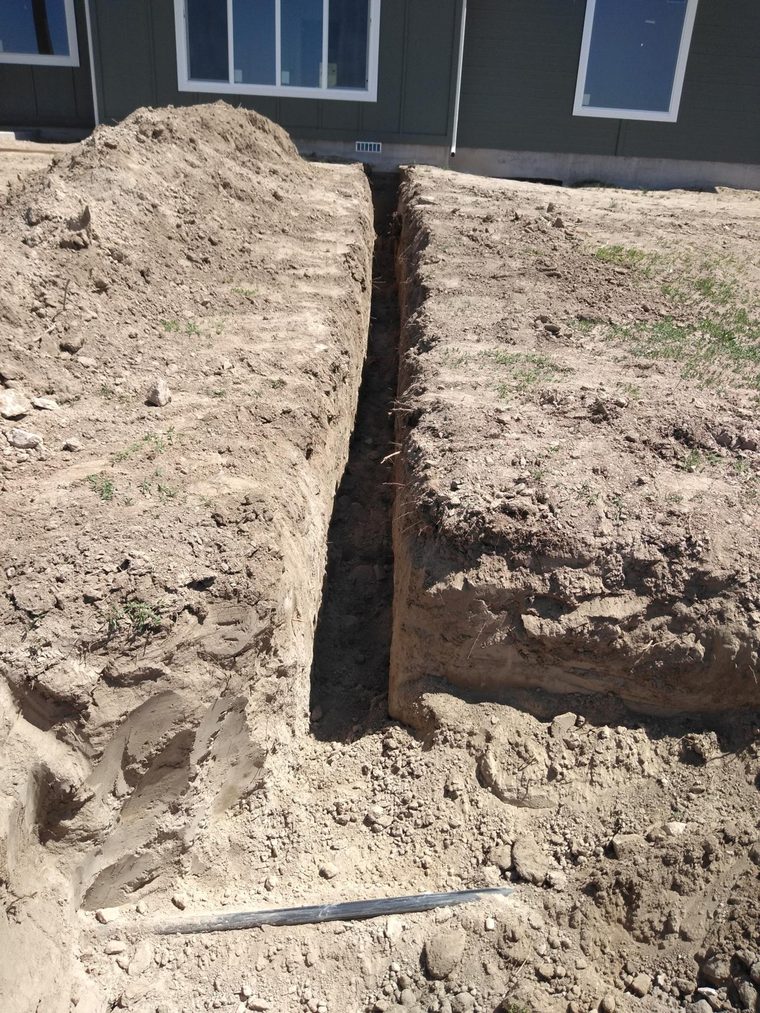
How We Do It
Locates before the bucket
Utility locates get called and marked before we dig. Cutting an unmarked line is expensive, dangerous and entirely avoidable, and no schedule is worth skipping it.
Depth and fall
Water and gas go below frost depth. Gravity sewer and drain lines need consistent fall over the whole run — a line that dips holds solids, and a line that runs backward at any point is a callback waiting to happen.
Bedding matters more than people think
A line laid straight onto rocky trench bottom takes point loads. Sand or fine bedding under and over the pipe is what keeps it from being crushed or scored during backfill.
Backfill and settlement
Backfill goes in and gets compacted rather than mounded up and left to settle. A trench that sinks six inches over the winter is a trip hazard and a place for water to collect.
Working around existing landscaping
On established properties we plan the route to avoid what we can and put back what we can't. Sod cut and set aside can go back down the same day.
Irrigation on acreage
Ground here comes with irrigation infrastructure — mainlines, laterals and canal crossings. We trench around it or tie into it, and we ask about it before we start rather than find it with a bucket.
Photos
From our own jobs.
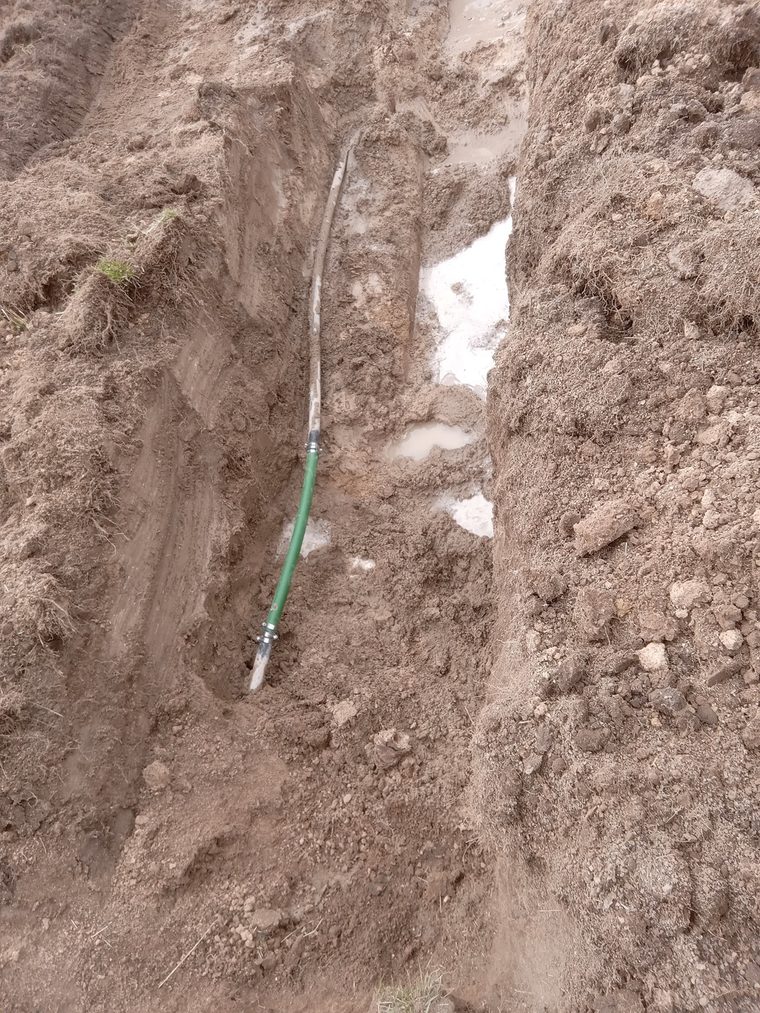
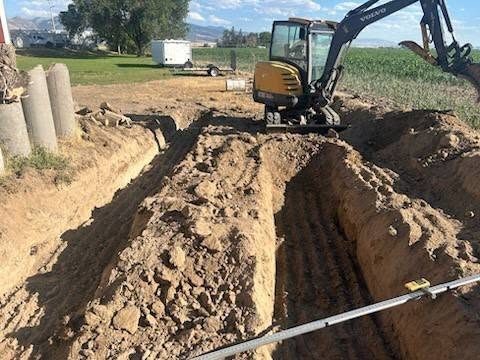
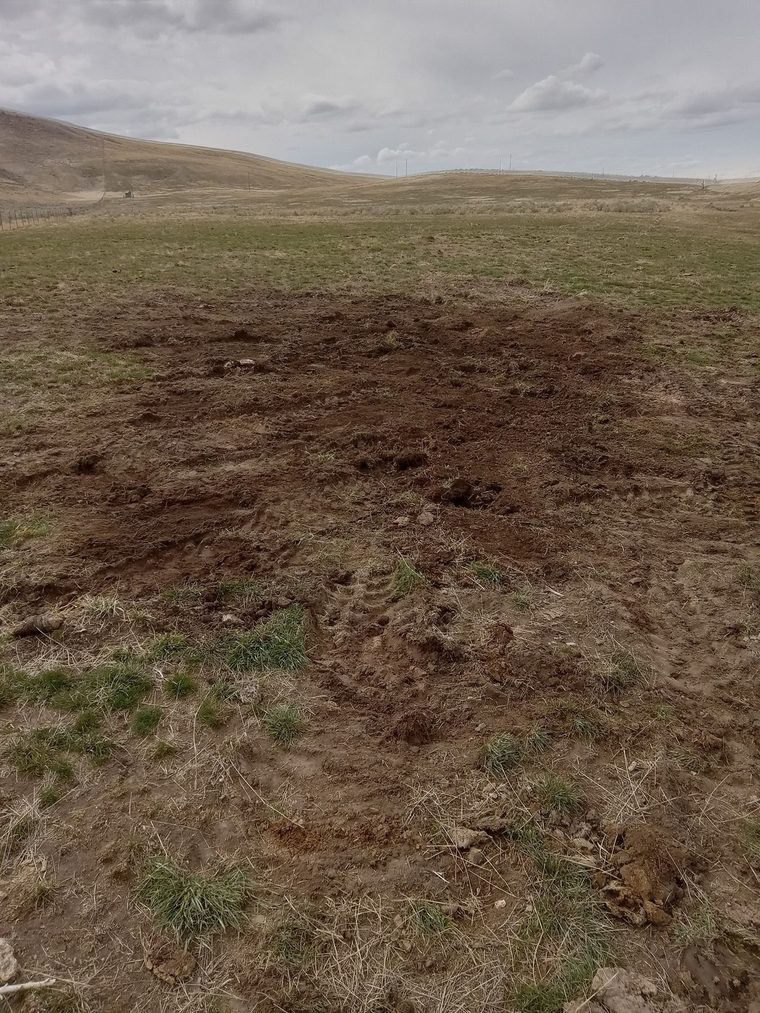
What to know before a trench goes in
What is going in it. Water, sewer, power, gas, irrigation, conduit. Each has its own depth, bedding and separation rules.
Where it starts and ends. Meter to house, well to house, house to septic tank, pump to pivot. The route sets the length and what we have to cross.
What is already buried. Locates cover public utilities. Private lines - the old sprinkler main, the line to the shop, the stock tank feed - are on you to remember and us to ask about.
Who is laying the line. A plumber, an electrician, you, or us for irrigation. We coordinate so the trench is open when they need it and not a day longer.
Backfill and compaction. Bedding under and over, then backfill in lifts. A trench that sinks over winter was not compacted.
Trenching across farm ground and new subdivisions
Ag properties around Burley, Rupert, Paul and Declo come with irrigation infrastructure - mainlines, laterals, canal crossings - and half of trenching there is working around it. The Twin Falls and Jerome side brings rock, which can mean a rock saw or a hammer for a water line that would be an easy dig in Cassia County. New subdivisions in Kimberly, Filer, Pocatello and Idaho Falls are mostly service trenches from the street to the house on ground that has already been graded. Every one of them starts with a locate ticket.
Free Estimates
Four things set the price on excavation work. We walk the property, look at all four, and hand you one written number before anything gets dug.
- AccessCan the excavator and dump trailer get to the work without wrecking the yard? Tight lots and soft ground add time.
- Soil and rockMagic Valley ground goes from sandy loam to basalt a foot down. Rock changes the machine, the pace and the price.
- Haul-off and materialsDirt hauled away, gravel and road base hauled in, concrete to the recycler. Distance to the pit or the dump sets the cost.
- Permits and locatesSeptic permits, inspections and utility locates are part of the job and part of the estimate, not an add-on at the end.
How It Works
- 01Call or text
Tell us what you need done and where. Photos of the site help, and a rough sketch of what you have in mind helps more.
- 02We walk the site
Free on-site estimate. We look at access, slope, soil, what is buried and where the water goes, then give you a written number.
- 03Locates and permits
Utility locates are called before any digging. Septic permits and inspections are scheduled with the health district.
- 04Dug, graded, cleaned up
The work gets done to grade, compacted where it needs to be, and the site is raked back so it is ready for whoever comes next.
Trenching & Utility Lines by Town
- Trenching & Utility Lines in Twin Falls
- Trenching & Utility Lines in Burley
- Trenching & Utility Lines in Rupert
- Trenching & Utility Lines in Heyburn
- Trenching & Utility Lines in Paul
- Trenching & Utility Lines in Declo
- Trenching & Utility Lines in Oakley
- Trenching & Utility Lines in Jerome
- Trenching & Utility Lines in Kimberly
- Trenching & Utility Lines in Filer
- Trenching & Utility Lines in Buhl
- Trenching & Utility Lines in American Falls
- Trenching & Utility Lines in Pocatello
- Trenching & Utility Lines in Idaho Falls
Questions
Do you call for utility locates?
Always, before any digging. It's free, it's required, and hitting an unmarked line is the most expensive thing that can happen on a trenching job.
How deep will the trench be?
Depends on the line. Water and gas go below frost depth per code; sewer and drain lines are set by the fall they need to run. We dig to what the line actually requires.
Will my yard be torn up?
Some disturbance is unavoidable, but we plan the route to limit it, keep sod where we can, and backfill and compact so the trench doesn't sink over the winter.
Can you trench for irrigation lines?
Yes — mainlines, laterals and runs out to fields or pivots. Ground around here comes with irrigation infrastructure and we work around what's already there.
Trenching & Utility Lines across the Magic Valley from Burley
Get a Free Estimate
Call or text for a free on-site estimate. Licensed and insured. Based in Burley, serving Twin Falls and all of the Magic Valley and Southern Idaho.